Remaining service life calculation of concrete: the key to sustainable management

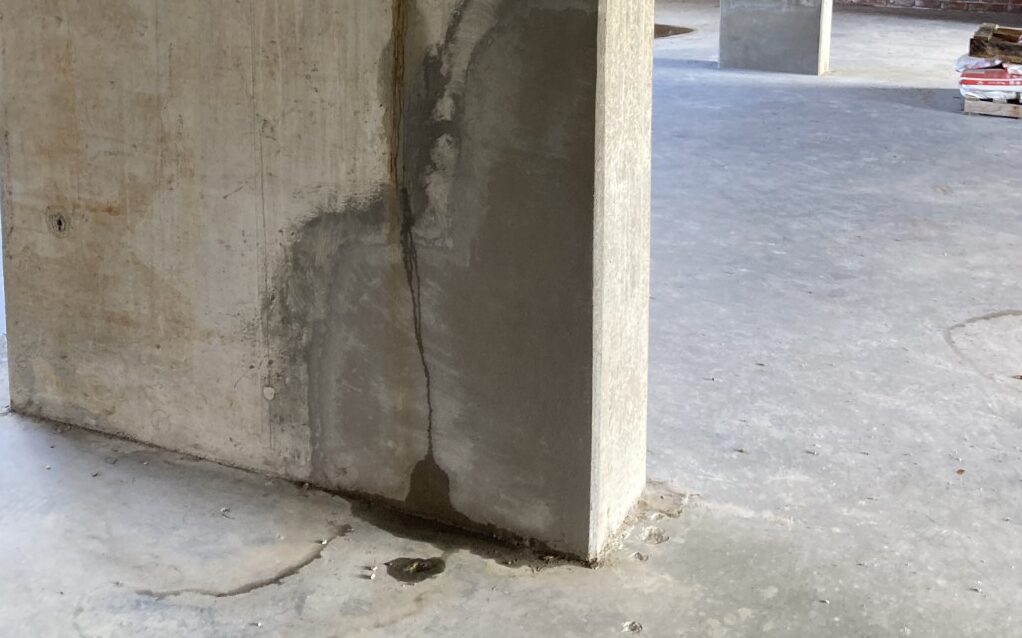
Over the course of their service life, existing concrete structures are exposed to environmental influences, mechanical loads, and chemical degradation processes. To prevent concrete decay or corrosion from leading to unexpected damage, an accurate calculation of the remaining lifespan of concrete is essential. Using advanced probabilistic modeling standards and our proprietary software platform DIMCOST® , managers, owners, and engineers gain clear, scientifically substantiated insight into the current condition of their concrete. This makes it possible to extend the lifespan of concrete in a timely and cost-effective manner and to get the most out of existing infrastructural and structural assets.
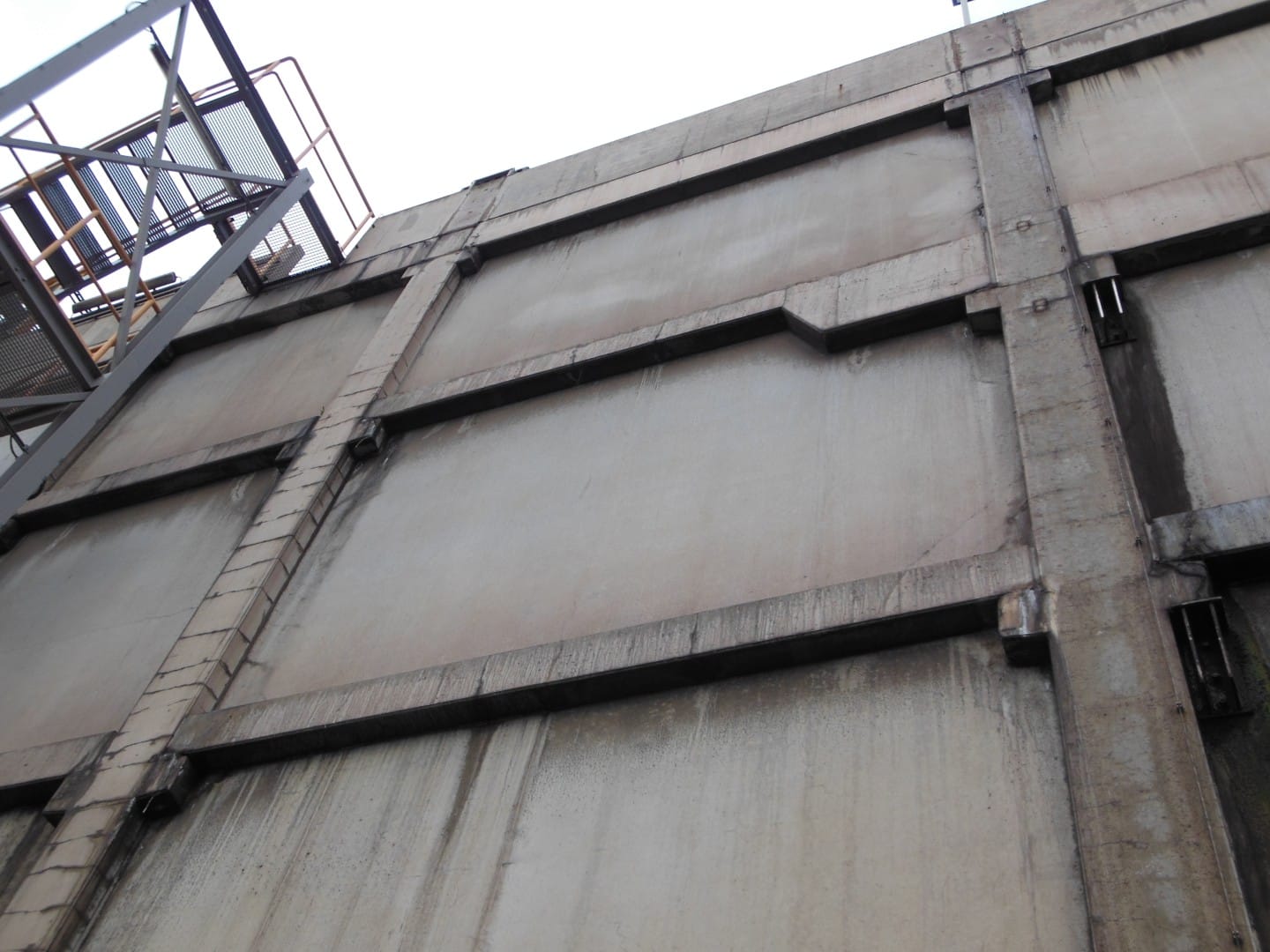
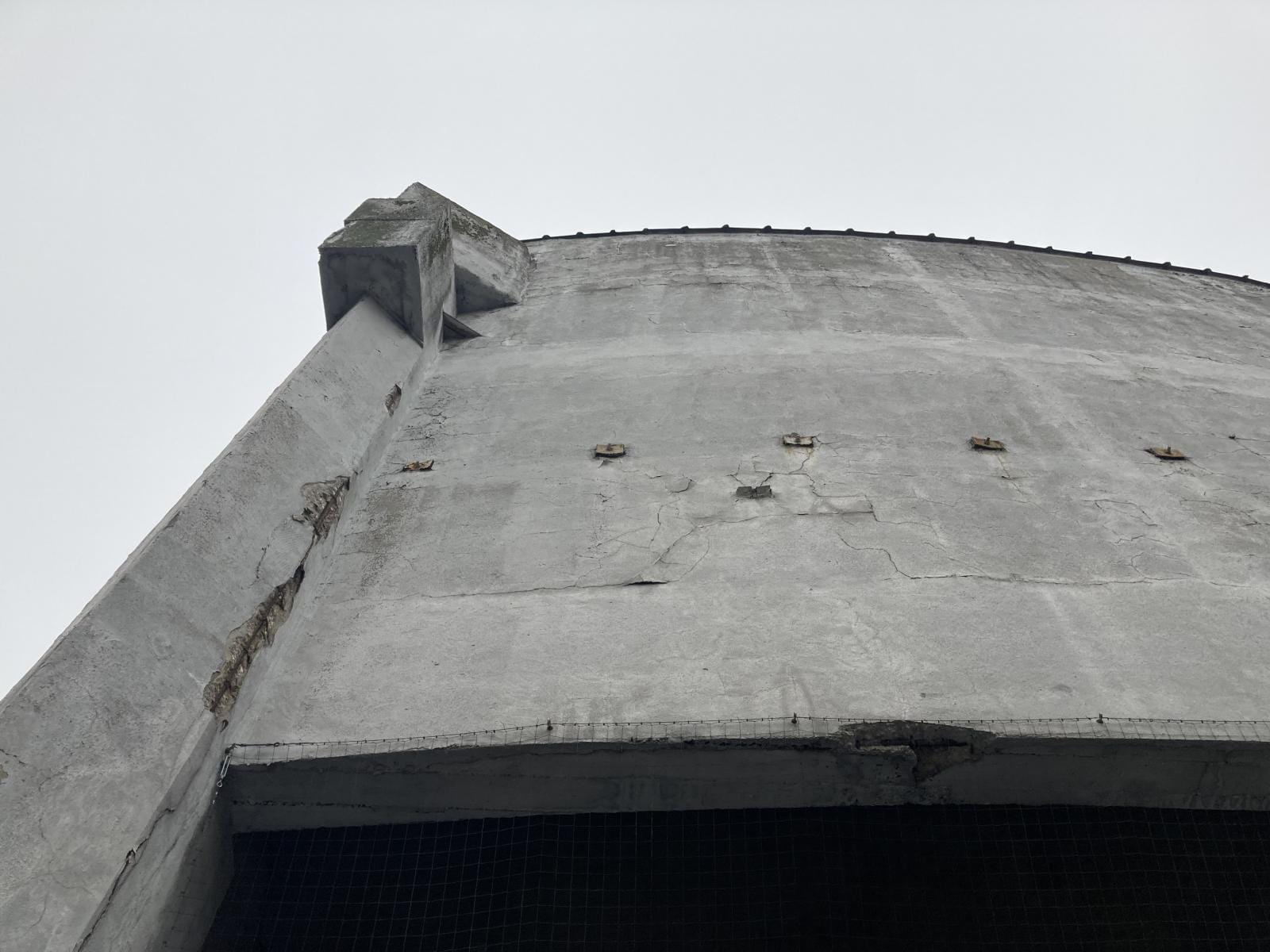
  • Buitenzijde van een betonnen koeltoren - Sanacon
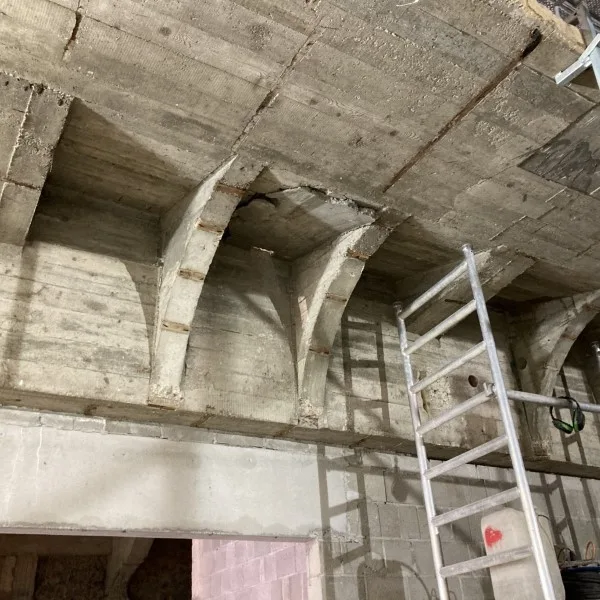
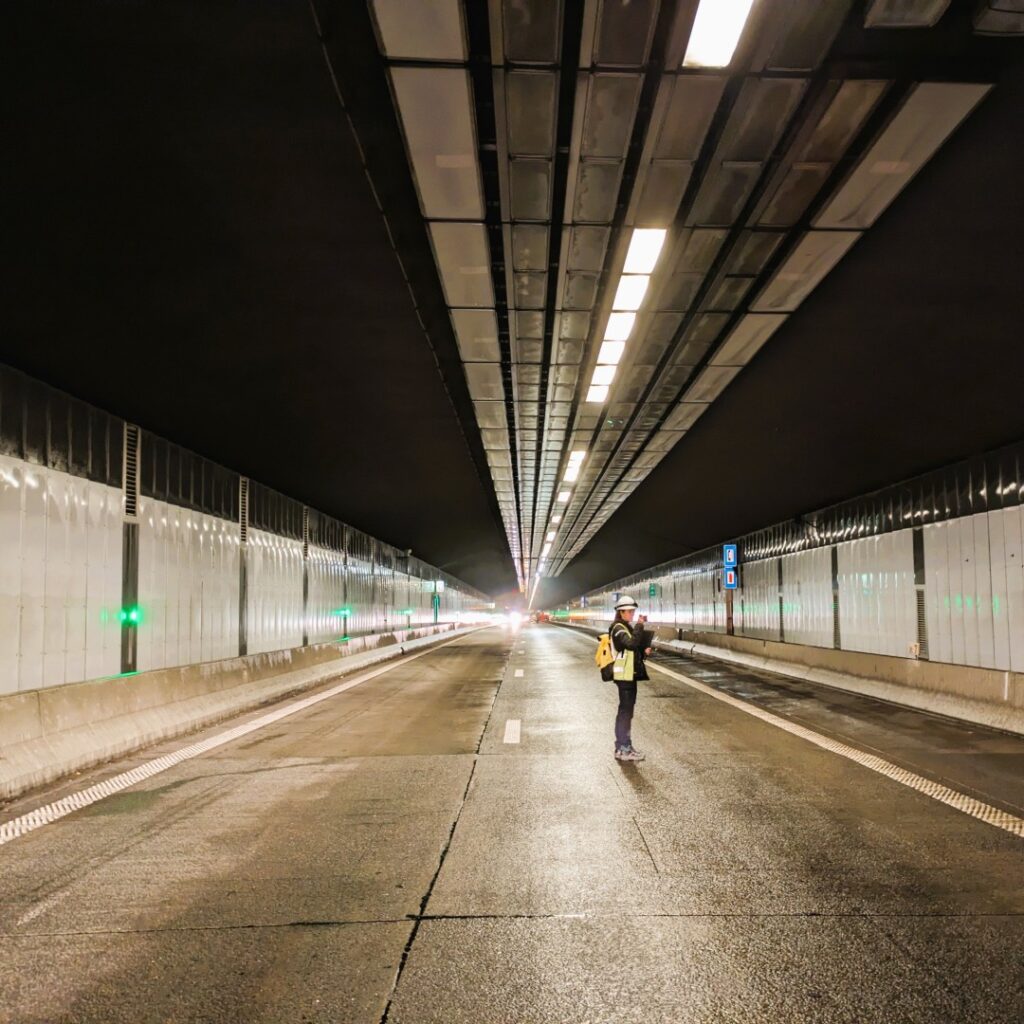
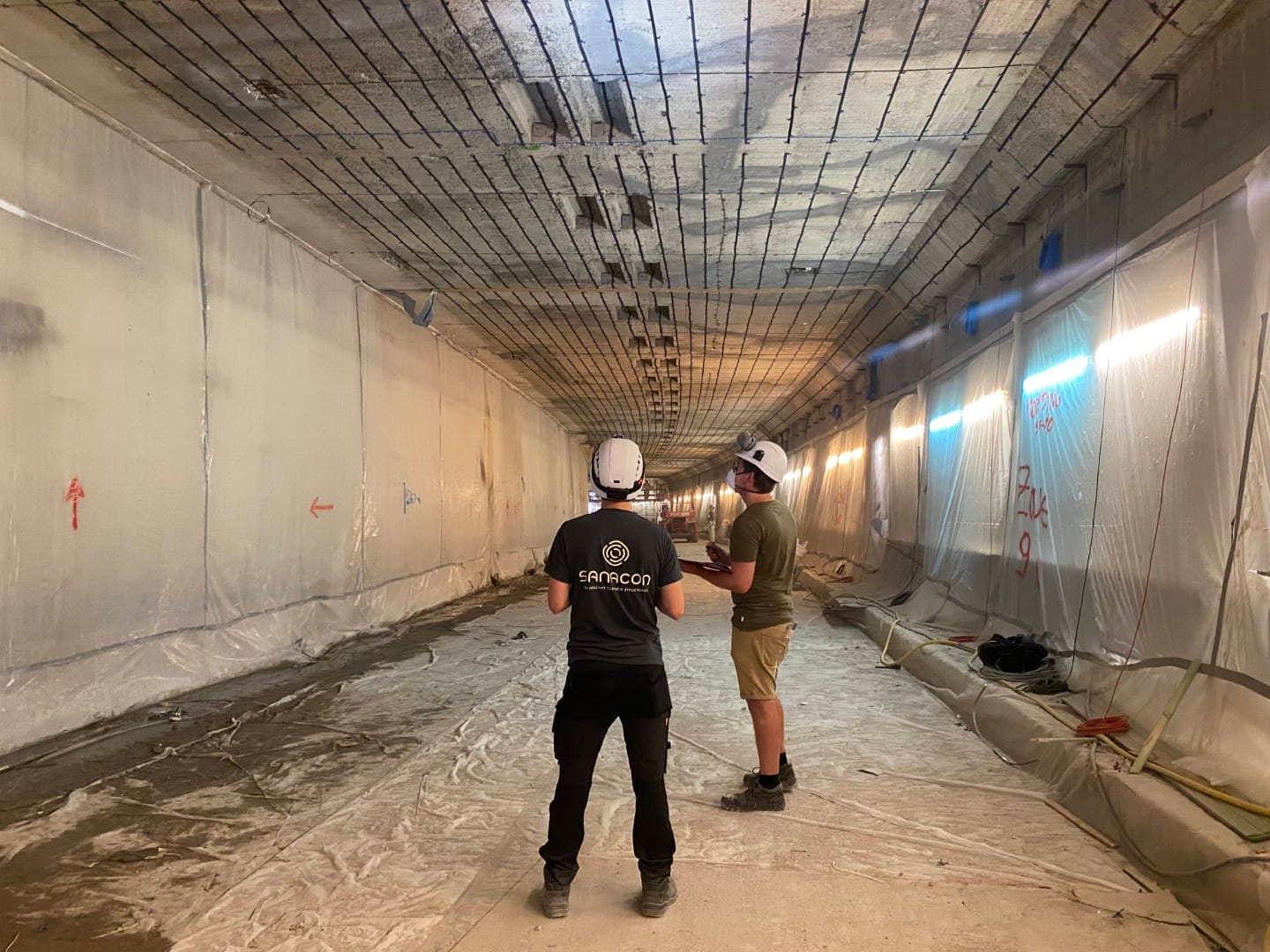
  • Installatie van een KB-systeem met opgedrukte stroom in een Brusselse tunnel - sanacon
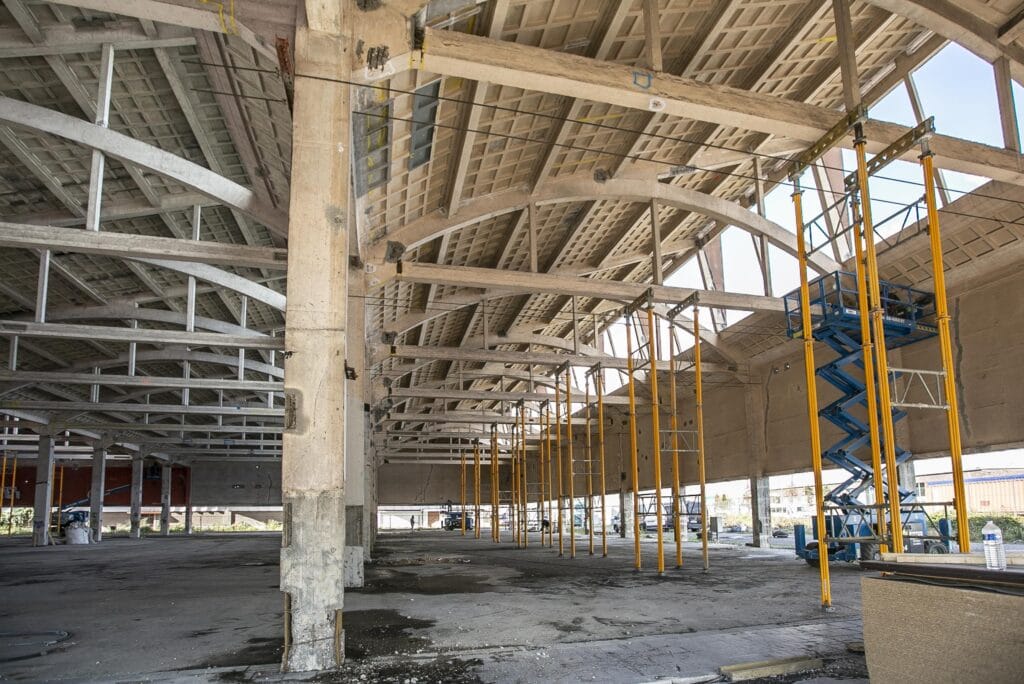
Betonherstel slachthuissite - sanacon

Degradation mechanisms and normative diagnostics of concrete

Substantiating a remaining service life calculation begins with a thorough concrete inspection and research in the field and the laboratory. The two main chemical causes of reinforcement corrosion (concrete decay) are carbonation (lowering of pH due to atmospheric CO₂) and chloride intrusion (originating from sea air or de-icing salts). To quantitatively translate these processes into a predictive model for corrosion prevention , established European calculation frameworks are used:

  • DuraCrete (EU Project BE95-1347): Forms the historical foundation of the probabilistic modeling of concrete durability. The DuraCrete model introduced the mathematical concept of the initiation phase (duration until corrosion initiation) and the propagation phase (damage build-up).
  • fib Bulletin 34 (Model Code for Service Life Design) & Bulletin 76: Build directly upon the DuraCrete methodology. These international standards from the International Federation for Structural Concrete provide recalibrated stochastic parameters and benchmark models for Fick’s second law of diffusion.
  • CUR Recommendation 121: In Belgian and Dutch practice, CUR 121 serves as the guideline for assessing the durability of existing concrete structures in which chloride- or carbonation-initiated corrosion occurs. This recommendation provides concrete guidelines for measurement grids and applies a critical limit for the probability of depassivation ( Pf = 30%) in thorough concrete testing.

By directly linking measurement results (such as concrete cover measurements, carbonation depths, and chloride profiles) to the mathematical parameters from DuraCrete , fib Bulletin 34 , and CUR 121 , a realistic picture emerges of the current and future damage phase of the structure.
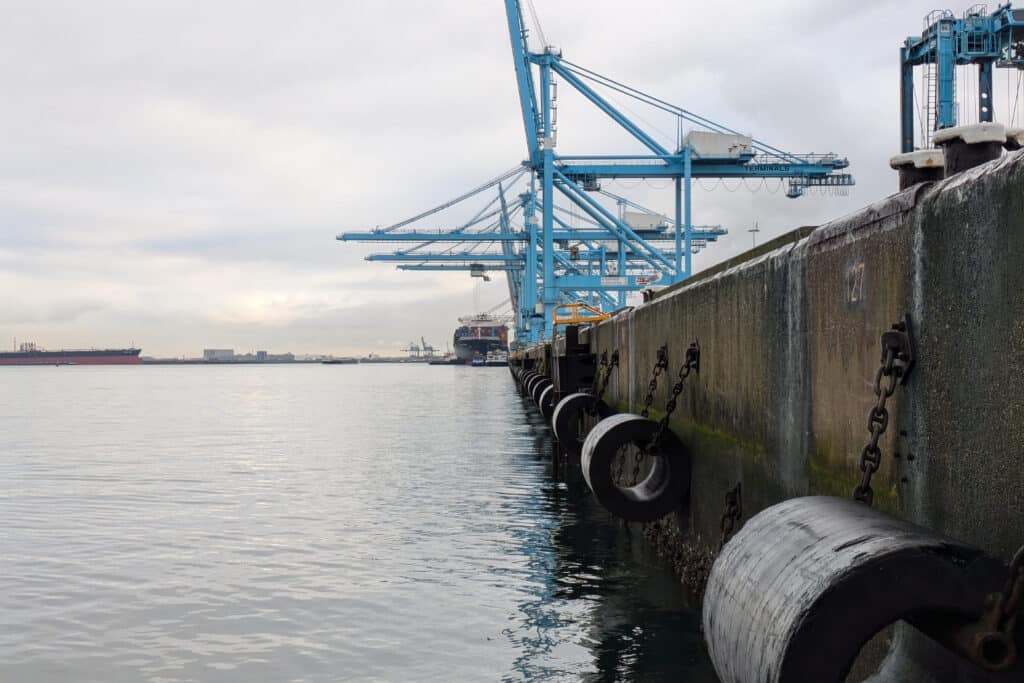
Restlevensduurberekening van een kaaimuur in de haven van Rotterdam

Digitization via the DIMCOST® platform and preventive maintenance

Performing a remaining service life determination is not a linear addition, but a stochastic probability calculation via Monte Carlo simulations. To efficiently translate field inspection data into reliable predictions, Sanacon uses the in-house developed software platform DIMCOST® .

  1. Automated Processing of fib and CUR Models: In DIMCOST® , the complex probabilistic calculation models from fib Bulletin 34 and CUR 121 are directly integrated. The platform processes the dispersion of concrete cover and penetration depths according to log-normal distributions to calculate the probability of depassivation ( Pf ) as a function of time.
  2. Insight into Invisible (Latent) Damage: While visual inspection reveals only the already visible ‘tip of the iceberg’ (cracking and spalling), the DIMCOST® analysis accurately maps latent, subsurface corrosion development before the damage becomes visible.
  3. Data-driven Maintenance and Repair Advice: The calculated remaining service life ( t SL,REM ) forms the basis for maintenance and investment scenarios (Multi-Year Maintenance Plan / MJOP). Depending on the outcomes, Sanacon advises:
    • Preventive protection: Hydrophobic layers, coatings or cathodic protection (appressed current or galvanic).
    • Structural repair: Timely concrete repair or the installation of carbon fiber reinforcement.

Thanks to the combination of advanced standards ( fib Bulletin 34 / CUR 121 ) and the digital computing power of DIMCOST® , unnecessary and costly replacements are prevented, while structural safety and durability remain guaranteed.

  • Can DIMCOST be used to optimize maintenance?

    Yes. The calculated failure probabilities and lifespan predictions allow maintenance strategies to be compared based on risk, timing, and impact. This makes maintenance data-driven rather than reactive .
  • How does DIMCOST help in pre-estimating failure risks?

    The platform contains scientifically proven models that calculate the probability of depassivation failure , caused by carbonation or chloride intrusion. This allows for precise identification of where and when risks arise.
  • How does DIMCOST support large infrastructure owners?

    The platform helps determine zoning : which zones of a tunnel, bridge, or industrial site have priority. This allows for budgetary and operational optimization of maintenance.
  • What is life extension of structures?

    Optimizing maintenance and repair to ensure structures remain safe and sustainable for longer.
PROJECTS

Recent projects

Discover how Sanacon extends the lifespan of existing structures with innovative techniques and sustainable solutions. Our projects demonstrate proven results in a wide range of sectors.
PROJECTS
Mathias Maes (links) en Tim Soetens (rechts), oprichters van Sanacon

We are happy to help you

Your structure deserves a future. Protection against deterioration, strengthening its load-bearing capacity, and extending its lifespan are crucial to prevent damage and high costs. Sanacon offers independent advice and innovative solutions to keep your structure sustainable and safe – today and for decades to come.