DIMCOST: Never wait for the debris to fall again
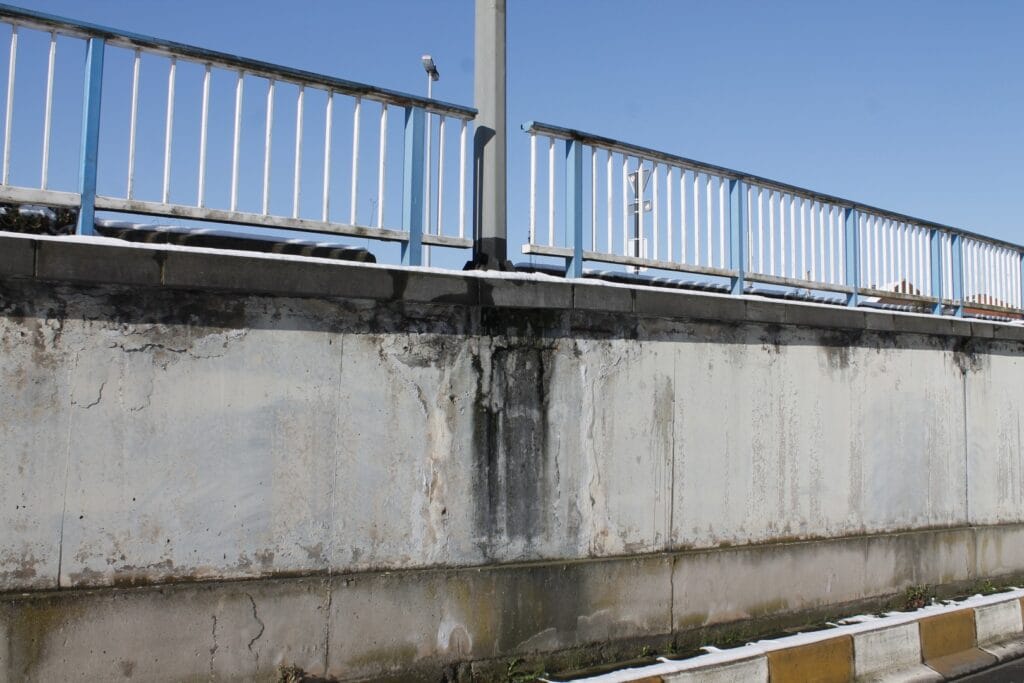
In recent years, it has been reported more than once in newspapers and magazines that tunnels had to be closed due to falling debris. As a result, numerous renovation projects have been initiated to thoroughly address problems caused by, for example, concrete decay. That is certainly a good thing, but it could have been done better. There are primarily two difficulties that need to be overcome. A task in which SANACON is happy to lend a hand.
Concrete damage: the tip of the iceberg
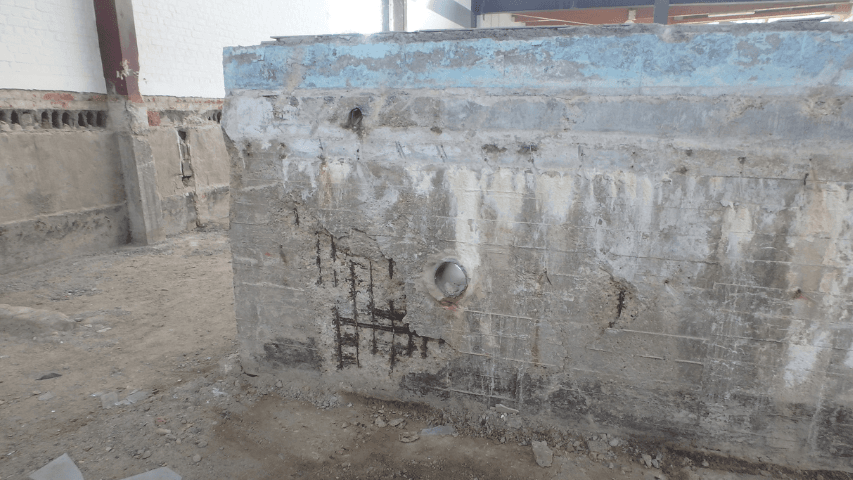
When inspecting and assessing concrete damage caused by reinforcement corrosion—commonly known as concrete rot—a major initial problem always arises: visible concrete damage is merely the tip of the iceberg. “One must realize that we cannot ‘see’ with the naked eye how extensive and severe the actual concrete damage is, or how advanced the underlying damage phenomena are. An example of this is the presence of small rust spots on the surface which, after chipping away the concrete, can indicate completely rusted reinforcement. Experience shows, therefore, that when property managers only consult us upon visual assessment of the damage, significant costs often can no longer be ruled out,” explains Dr. Tim Soetens, one of the directors at Sanacon.
When there is visible concrete damage requiring extensive concrete repair, it is often also desirable to estimate the volume of concrete repair. However, this is only possible after determining the severity and cause of the damage, information that is necessary to prescribe a sustainable repair technique.
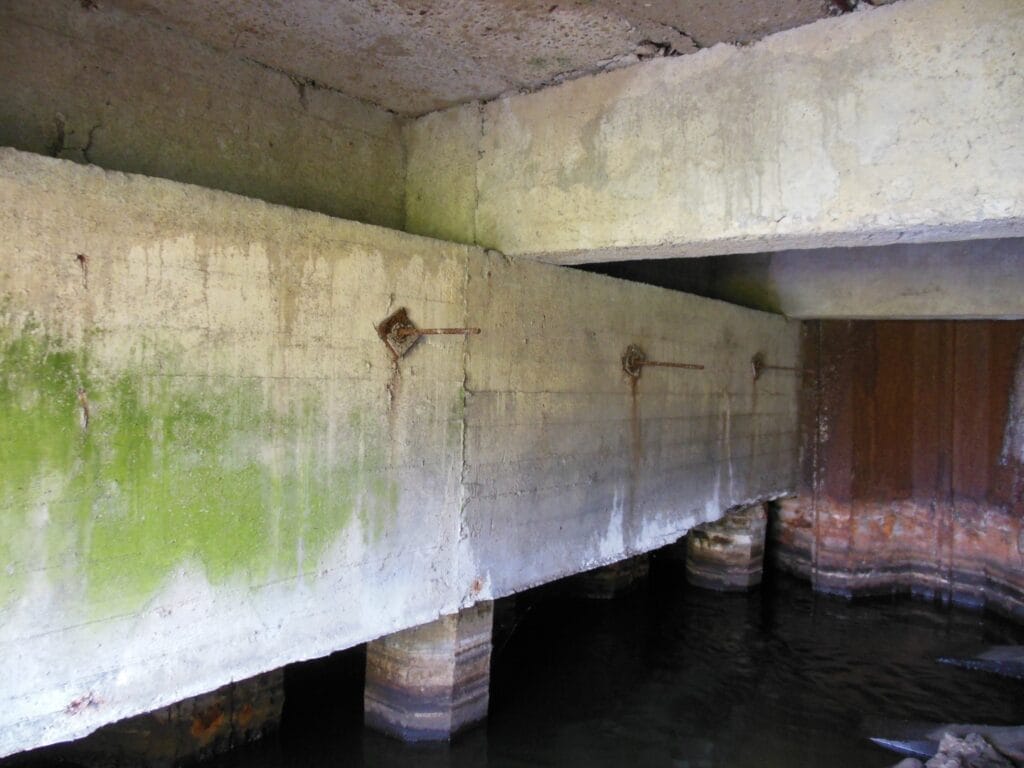
It is of great importance here not to focus solely on the visibly damaged concrete, as previously indicated. Nevertheless, the amount of concrete repair required is often underestimated by a ‘trained eye’, again because people fixate on what is only visually visible, without taking into account the already corroding part of the reinforcement that is not (yet) visible on the surface.
DIMCOST
To solve these two problems, the engineers at SANACON have developed a scientifically sound calculation tool called DIMCOST (Durability Information Model for Concrete Structures), which calculates the probability of failure and remaining service life based on measured values such as concrete cover, carbonation, and chloride penetration. This is the true added value of a concrete survey: planned interventions aimed at maximizing prevention. No more waiting for the first crack or a falling piece.
A very first application of this scientifically based approach was deployed for the risk assessment and zoning of the repair and maintenance planning for the roof slab of the Brussels Annie Cordy Tunnel (formerly the Leopold II Tunnel), commissioned by CIRCUL 2020, the consortium including BESIX and Jan De Nul. Later, this approach was also used for industrial projects such as the casings of cooling towers and concrete silos in the Ghent area.
“Involvement in these projects accelerated the development of our internal software tool,” says Mathias Maes, co-managing director of SANACON. “In addition to the need to quickly and efficiently process a huge amount of data such as concrete cover, carbonation depth, and chloride measurements, it soon became apparent that the capabilities of this tool extended much further, and maximum effort was put into further internal development.”

During the inspection and assessment of concrete damage caused by reinforcement corrosion—commonly known as concrete rot—a major initial problem always arises: visible concrete damage is merely the tip of the iceberg.
Objective data and criteria
Thanks to the specific functionality to link the probability of failure to specific repair techniques and costs per element type and type of damage, the use of DIMCOST offers a unique opportunity to estimate the costs for the maintenance or repair of concrete damage more accurately. Whereas this was previously done in a purely subjective manner, SANACON offers an alternative based on objective data and criteria. With this tool, it is even possible to predict when the first visual concrete damage will become apparent.
“The use of DIMCOST has already proven itself multiple times in practice and is, moreover, still being further expanded with other functionalities and improved user interfaces based on feedback from our employees,” says Annelies De Wit, responsible for the further development of the tool within SANACON. “Thanks to in-house follow-up, we can react quickly, making even developments tailored to specific customers or constructions possible.”
This is a revision of a previously published article in Bouwen aan Vlaanderen .